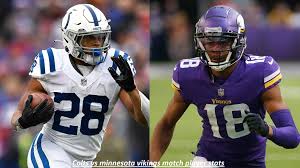
When it comes to NFL showdowns Colts vs Minnesota Vikings Match Player Stats steeped in strategic battles and gritty performances, few matchups bring intrigue like the Indianapolis Colts vs. Minnesota Vikings. Whether you’re a die-hard fan, a fantasy football enthusiast, or someone who loves dissecting player performance, this article provides a clear, expert-level breakdown of the key stats from one of their most recent face-offs — all written in a casual, engaging style.
Let’s dive deep into the numbers that defined this clash.
Game Overview: Colts vs Vikings Match Stats
The Colts and Vikings have met numerous times over the years, but a notable recent contest showcased Minnesota emerging with a 21–13 victory over Indianapolis. This game highlighted contrasting styles: the Vikings’ potent passing attack against a Colts team striving to find offensive rhythm.
Offensively, Minnesota dominated in total yardage, gaining 415 yards compared to Indianapolis’ 227. The Vikings also maintained a longer time of possession, controlling the game’s tempo. Third-down efficiency told a similar story — the Vikings converted 50% of their attempts, while the Colts managed just 27.3%.
From this overview, it’s clear how Minnesota asserted their offensive identity and limited Indianapolis’ momentum, a trend reflected in the player stat lines we’ll explore next.
Passing Leaders: Quarterback Performances
Quarterback play was a defining element of this matchup. For Minnesota, Sam Darnold delivered a strong outing, completing 28 of 34 pass attempts for 290 yards and three touchdowns, though he also threw two interceptions. His effectiveness in the second half was instrumental in Minnesota’s offense staying ahead.
On the Colts’ side, Joe Flacco started at quarterback, completing 16 of 27 passes for 179 yards with no touchdowns and one interception. Flacco also faced consistent pressure, which hindered his ability to create big plays.
Darnold’s ability to spread the ball effectively, even with turnovers, gave Minnesota a clear edge. Flacco, meanwhile, struggled to connect on deep or explosive plays, which contributed to Indianapolis’ offensive struggles.
Rushing Attack: Ground Game Breakdown
In this matchup, the Vikings excelled in the running game, gaining 133 rushing yards on 32 carries compared to the Colts’ 68 yards on 19 attempts.
Although individual rushing leaders didn’t dominate the stat sheet with spectacular numbers, Minnesota’s balanced ground game helped sustain drives and keep the chains moving. For the Colts, the lack of consistent rushing production forced a heavier reliance on passing, making it easier for the Vikings’ defense to predict plays.
Controlling the rushing game helped Minnesota manage the clock and maintain possession — a strategy they executed effectively throughout the contest.
Top Receiving Performances: Standout Playmakers

Minnesota’s passing attack Colts vs Minnesota Vikings Match Player Stats heavily featured Justin Jefferson, who finished with 137 receiving yards, demonstrating his ability to beat defenders and consistently move the chains. His presence forced the Colts’ defense to cover him closely, creating opportunities for other receivers.
Tight end Josh Oliver contributed a touchdown that helped seal Minnesota’s lead later in the game. For the Colts, Josh Downs was a reliable target, providing yardage but not enough to change the game’s outcome. Jefferson’s performance clearly stood out as the most impactful in this matchup.
Defensive Highlights: Game Changers
While offensive stats grab attention, defensive plays significantly impacted the game. The Vikings’ defense recorded multiple tackles for loss and disrupted key Colt drives.
For Indianapolis, Grover Stewart made notable contributions on the defensive line, including a strip-sack that led to a defensive touchdown by Kenny Moore II, which accounted for the Colts’ lone touchdown.
Sacks, forced turnovers, and momentum-shifting plays clearly favored Minnesota, complementing their offensive efficiency and maintaining control.
Team Comparison: Where the Game Was Won
Condensing the stats highlights the Vikings’ advantages:
- Passing Efficiency – More yards and multiple scoring plays sustained drives.
- Time of Possession – Minnesota controlled the clock, limiting Indianapolis’ opportunities.
- Balanced Offense – Mixing the run with the pass allowed for consistent drives and explosive plays.
- Momentum Plays – Key defensive stops and timely offensive bursts kept Minnesota in control.
While the Colts showcased fight and flashes of potential, they couldn’t maintain enough offensive consistency to challenge Minnesota.
Looking Ahead: What These Stats Tell Us
Even focusing on a single matchup, the trends are instructive. The Colts need more consistent offensive execution and reduced turnovers to remain competitive. The Vikings should maintain their explosive plays while minimizing turnovers to continue dominating.
For fans, these statistics reveal how a game can hinge on individual performances, team tempo, and execution in critical moments. The Colts vs Vikings matchup provided plenty of yardage, strategic battles, and player-level efforts worth analyzing.