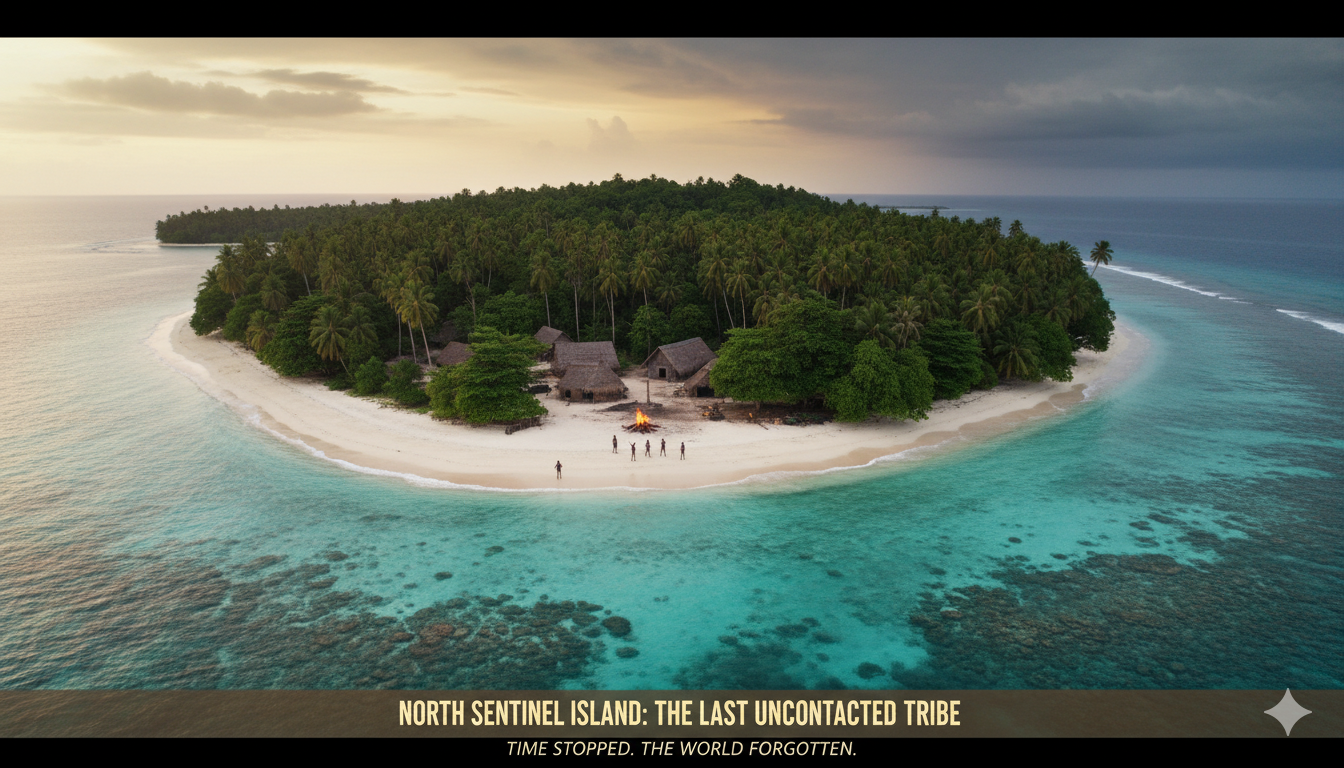
Have you ever wondered if there is still a place on Earth where time has completely stood still? North Sentinel Island Imagine a beautiful green island surrounded by crystal blue waters where no one uses a phone, wears modern clothes, or even knows that the rest of the world exists. This place is real, and it is called North Sentinel Island. Tucked away in the Bay of Bengal, this mysterious land is home to a group of people who have said “no” to the modern world for thousands of years.
Learning about North Sentinel Island is like looking into a mirror of our own distant past. While we are busy with AI and space travel, the people there are living a life of hunting and gathering, just like humans did long ago. It is a place of great beauty but also great danger, as the locals are famous for protecting their home with bows and arrows. Let’s take a journey to understand who they are and why they choose to stay hidden.
What is North Sentinel Island?
North Sentinel Island is a small, square-shaped piece of land that belongs to the Andaman and Nicobar Islands of India. It is about the size of Manhattan, but instead of skyscrapers, it is covered in thick, dark green jungles. The island is surrounded by sharp coral reefs that make it very hard for boats to get close. This natural wall has helped keep the inhabitants safe and alone for a very long time.
The Indian government treats the island as a sovereign area, which means they let the people there rule themselves. In fact, it is illegal for anyone to go within five miles of the shore. This rule is there to protect both the visitors and the tribe. Because the north sentinel island people have been alone for so long, their bodies might not be able to fight off common germs like the flu or the cold. A simple sneeze from a visitor could sadly end their entire way of life.
Who are the North Sentinel Island People?
The people living here are known as the Sentinelese. They are one of the last uncontacted tribes in the entire world. When we talk about the north sentinel island tribe, we are talking about a group of people who are incredibly strong and healthy. Scientists who have seen them from a distance say they have dark skin and very fit bodies. They don’t use money, they don’t have schools, and they live entirely off what the forest and the ocean provide.
Because no one can get close, we don’t know much about their language or their daily chores. However, we do know they are experts at survival. They use long bows to hunt for wild pigs and lizards in the jungle. They also use hand-carved canoes to fish in the shallow waters near the beach. They are the true masters of their environment, living in total harmony with nature without any help from the outside world.
The Mystery of the North Sentinel Island Population
One of the biggest questions scientists have is about the north sentinel island population. Since we cannot go there to count them, we have to make smart guesses. Most experts think there are between 50 and 200 people living on the island. During the 2011 census, Indian officials tried to count them from a boat using binoculars and saw only 15 people, but they know many more were likely hiding in the trees.
Interestingly, there is very little known about the population woman north sentinel island. In the few photos and videos that exist, women are sometimes seen wearing fiber strings around their waists and heads. They play a huge role in gathering food and looking after the communal huts where families sleep. Even though we don’t know their names, it is clear that the woman north sentinel island residents are the backbone of this ancient community.
Detailed Biography Table: North Sentinel Island
| Category | Details |
| Official Name | North Sentinel Island |
| Location | Bay of Bengal, Andaman Islands, India |
| Area | Approximately 23 square miles (60 sq. km) |
| Tribe Name | Sentinelese |
| Estimated Population | 50 to 200 individuals |
| Language | Sentinelese (unclassified and unknown) |
| Primary Weapons | Longbows, flat bows, and iron-tipped arrows |
| Legal Status | Protected Tribal Reserve (Contact is prohibited) |
| Main Diet | Fish, wild boar, fruits, tubers, and honey |
Where is North Sentinel Island Located?
If you look at a north sentinel island map, you will find it sitting about 30 miles west of the city of Port Blair. It is part of an archipelago, which is just a fancy word for a group of islands. Even though it looks like a tropical paradise, it is one of the most forbidden places on the planet. The waters around it are patrolled by the Indian Navy to make sure no one tries to sneak onto the beach.
Being so far out in the ocean has allowed the tribe to develop its own unique culture. They are different from the other tribes in the Andaman Islands, like the Jarawa or the Onge. While those groups have started to talk to the modern world, the people of North Sentinel Island have stayed firm in their wish to be left alone. They are the true guardians of their island.
High-Tech Sightings: Drone North Sentinel Island
In recent years, technology has given us a tiny peek into their lives without putting anyone in danger. Using a drone north sentinel island footage has captured images of the tribe members standing on the beach. In some videos, you can see them looking up at the “flying birds” with great curiosity. Sometimes they even try to shoot the drones down with arrows!
These drone flights are very controversial. While they help us see that the tribe is still healthy and thriving, many people believe we should respect their privacy. If they want to be left alone, even a drone might feel like an invasion to them. However, these images do confirm that the tribe survived big events like the 2004 tsunami, which was a huge relief to the rest of the world.
Tragic Events and North Sentinel Island Deaths
Sadly, the history of this island includes several north sentinel island deaths. Most of these happen when people ignore the warnings and try to land on the shore. In 2006, two local fishermen fell asleep in their boat, and it drifted onto the island’s beach. Because the tribe sees all outsiders as a threat, the fishermen were killed. Even a police helicopter that tried to recover the bodies was met with a hail of arrows.
The most famous recent case happened in 2018, when a young American missionary named John Allen Chau tried to visit the island to share his religion. Despite several warnings, he went back to the beach multiple times. Sadly, he did not survive his final trip. These stories remind us that the Sentinelese are not being “mean”—they are simply protecting their home from what they see as an invasion.
The Famous North Sentinel Island Shipwreck
Did you know there is a giant “ghost ship” on the island? In 1981, a large ship called the MV Primrose got stuck on the coral reefs during a storm. This north sentinel island shipwreck is still visible today from satellite photos. The sailors on the ship were terrified when they saw men on the beach pointing arrows at them. Luckily, the crew was rescued by a helicopter before the tribe could reach the ship.
For the tribe, the shipwreck was actually a gift. They were able to take metal from the boat to make better arrowheads. Before this, they mostly used bone or wood. This shows that even though they are isolated, they are very smart and know how to use the things that wash up on their shores to make their lives easier.
Why We Must Protect Their Isolation
The biggest threat to North Sentinel Island isn’t arrows—it’s us. Because the tribe has been isolated for perhaps 60,000 years, they have no immunity to the diseases we carry. Even a common cold virus could be like a plague to them. This is the main reason why the “hands-off, eyes-on” policy is so important.
By staying away, we are giving them the gift of life. They have everything they need on their island: clean water, plenty of food, and a strong community. They don’t need our technology or our medicine to be happy. They have proven that they can take care of themselves perfectly fine, just as they have done since the dawn of time.
FAQs About North Sentinel Island
1. Can I visit North Sentinel Island as a tourist?
No, it is strictly illegal to visit. The Indian government has a 5-mile exclusion zone around the island. Going there can result in jail time or, more dangerously, an attack by the tribe.
2. Do the Sentinelese people know how to make fire?
It is believed that they do not know how to start a fire from scratch. Instead, they wait for lightning to strike a tree and then carefully keep the embers burning in their communal huts for as long as possible.
3. What language do they speak?
No one knows! Their language is completely different from the languages of nearby islands. This suggests they have been separated from other humans for thousands of years.
4. Why are they so hostile to outsiders?
History shows that past visits by outsiders (like the British in the 1800s) often led to kidnapping or death from disease. The tribe likely views any stranger as a dangerous intruder who might bring harm.
5. Has anyone ever had a peaceful meeting with them?
Yes! In the 1990s, an Indian anthropologist named Madhumala Chattopadhyay was part of a team that successfully gave them coconuts. It was a rare moment of peace, but the government eventually stopped these visits to protect the tribe’s health.
6. Is there internet or electricity on the island?
Not at all. The Sentinelese live a hunter-gatherer lifestyle. They have no modern technology, no power grids, and no connection to the outside world.
Conclusion: A Lesson in Respect
North Sentinel Island is a powerful reminder that there is more than one way to live a human life. While we are obsessed with progress and new gadgets, the Sentinelese remind us of the beauty of simplicity and the strength of a community that wants nothing more than to be left in peace. They are the ultimate survivors, living on a tiny green dot in a massive ocean.
The best way we can help them is by doing nothing at all. By respecting their boundaries and keeping our distance, we ensure that this incredible piece of human history continues to thrive. Let’s appreciate the mystery from afar and keep the last uncontacted tribe safe for generations to come.